Introduction
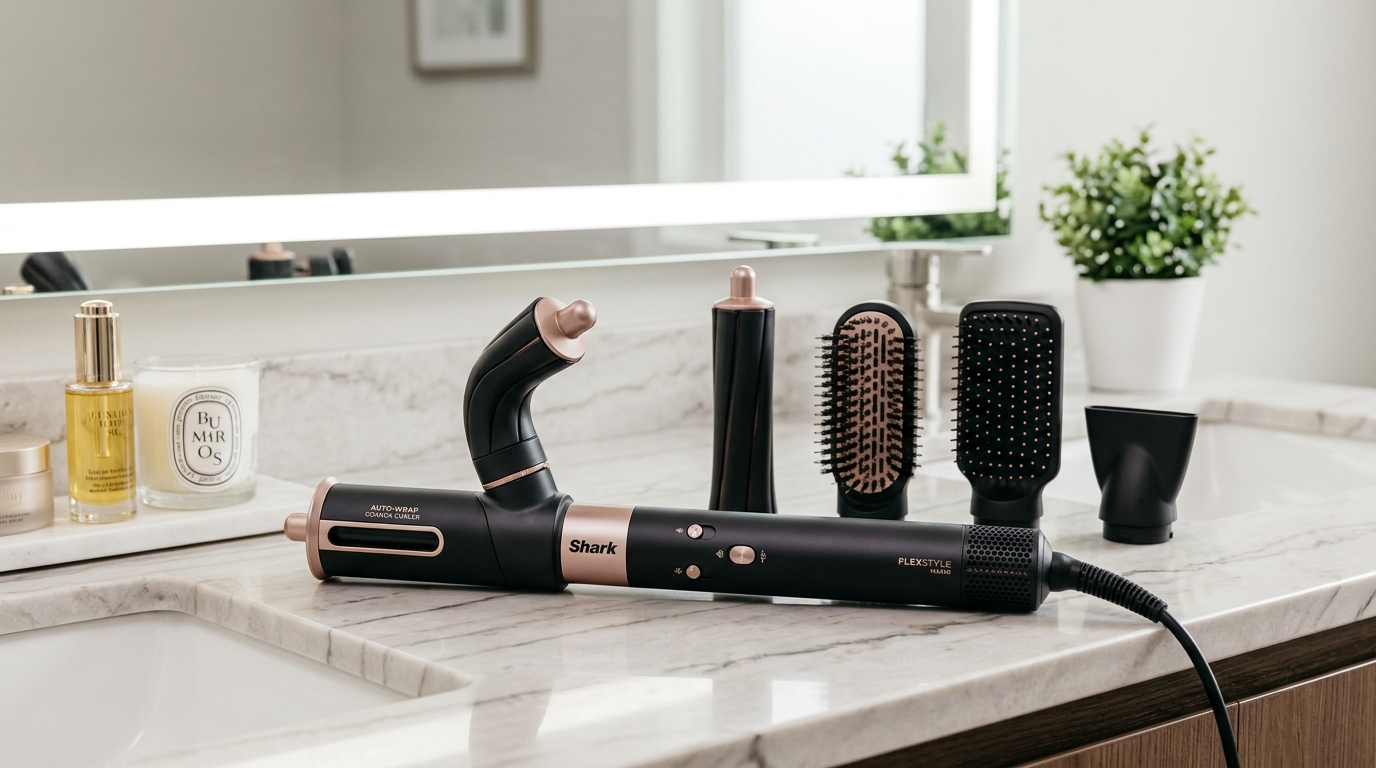
Hair styling tools have increasingly moved toward airflow-based technology as an alternative to traditional high-heat tools like curling irons, aiming to style hair using controlled air pressure and lower direct heat exposure. The Shark FlexStyle Air Multi-Styler & Drying System, model HD430, fits into this category, combining drying functionality with styling attachments that use what’s described as Coanda curler technology, a specific airflow principle applied to create curls and waves.
This article takes a thorough look at what the FlexStyle system offers, the different everyday styling situations in which it tends to be used, who this kind of air-based multi-styling system is generally best suited for, and a range of practical points worth thinking through before adding it to a regular hair care routine.
Key Features
Air-Based Styling System
Rather than relying primarily on direct contact heat the way a traditional curling iron does, this system is built around using controlled airflow as a central part of the styling process. This approach is generally intended to reduce the amount of direct heat damage that can sometimes result from more traditional high-heat styling tools, while still achieving curls, waves, or other styling outcomes.
Coanda Curler Technology
A distinguishing feature of this particular model is its use of what’s described as Coanda curlers. The Coanda effect, in general physics terms, refers to the tendency of a moving fluid, such as air, to follow the curved surface of an object rather than flowing away from it in a straight line. Applied to hair styling, this principle is generally used to wrap hair around a curling barrel using airflow rather than requiring the hair to be manually wrapped around a traditional heated barrel, which can simplify the curling process for some users.
Combined Drying and Styling Functionality
As indicated by its name, this system is designed to handle both drying and styling within a single device, generally intended to reduce the number of separate tools needed during a typical hair care routine, similar in concept to other multi-function styling systems but built specifically around this airflow-based approach.
Multiple Attachments for Different Styling Outcomes
Systems like this typically include a range of attachments beyond just the curling barrels, often incorporating tools for smoothing, volumizing, or general drying, allowing for a range of different styling results depending on which attachment is used for a given session.
Designed to Reduce Direct Heat Exposure
Because the system relies more heavily on airflow as part of the styling mechanism, it’s generally positioned as a potentially gentler alternative to traditional high-heat styling tools, which may appeal to those specifically concerned about heat damage from more conventional curling or straightening devices.
How It Can Be Used
Given its combination of drying functionality and airflow-based curling technology, this styling system tends to be used across a fairly wide range of everyday hair care situations.
Everyday hair drying. As with other multi-function styling systems, the foundational use case remains basic hair drying, generally serving as the starting point before any additional styling attachments are used.
Creating curls or waves using airflow. The Coanda curler attachments are specifically designed to create curls or waves using the airflow-based wrapping technique, offering an alternative to manually wrapping hair around a traditional heated curling barrel.
Smoothing and volumizing. Depending on the additional attachments included with this system, it can also generally be used for smoothing hair for a sleeker look or adding volume at the roots, similar to other multi-tool styling systems.
Reducing reliance on multiple separate heat tools. Because this system combines several functions into one base unit, it can help reduce the need for separate standalone devices, such as a traditional curling iron, a separate blow dryer, and other individual styling tools.
Those specifically seeking lower direct-heat styling options. Given the emphasis on airflow as part of the curling mechanism, this system is often chosen specifically by those looking for a styling approach that relies less heavily on sustained, direct heat contact compared to some traditional styling tools.
Who It May Be Suitable For
This type of air-based multi-styling system tends to appeal to a fairly specific range of users, including:
- Those interested in reducing direct heat exposure to hair, given the airflow-based curling approach, which is generally positioned as a potentially gentler alternative to some traditional high-heat styling methods.
- Individuals looking to consolidate their styling routine, given the combination of drying and multiple styling functions within a single system.
- Those curious about trying airflow-based curling technology, particularly if they’ve found traditional curling irons challenging to use or are interested in exploring a different styling mechanism.
- People who regularly switch between different styling outcomes, such as alternating between curls, smooth styles, or added volume, depending on which attachments are included and used.
- Those looking to reduce bathroom counter clutter and simplify travel packing, given that a single multi-function system can replace several separate styling devices.
On the other hand, those who are already highly comfortable and satisfied with a traditional curling iron technique, or who prefer very specific, tight curl patterns that might be more precisely controlled with a traditional heated barrel, may want to consider whether this airflow-based approach matches their specific styling goals before switching.
Important Things to Consider
Before choosing this type of air-based styling system, a few practical points are worth thinking through.
Adjusting to a different curling technique. Since the Coanda curler technology relies on airflow rather than traditional manual wrapping around a heated barrel, there may be an adjustment period for those accustomed to conventional curling irons, as the technique and feel of using this system can differ noticeably from more traditional tools.
Understanding the range of included attachments. It’s worth reviewing exactly which attachments are included with this particular model and what each one is specifically designed to achieve, since multi-function systems can vary in their exact attachment lineup.
Heat settings and hair type considerations. While this system is generally positioned as a gentler alternative in terms of heat exposure, it’s still worth considering appropriate heat settings for a specific hair type and texture, since different hair types often respond differently to styling tools regardless of the underlying heat or airflow mechanism.
Attachment storage and organization. As with other multi-tool systems, it’s worth considering how the various attachments will be stored when not in use, since managing several separate pieces requires more organization compared to a single, standalone styling tool.
Learning curve for new techniques. Since airflow-based curling represents a different approach compared to traditional heated barrels, it’s worth setting realistic expectations about an initial learning period while adjusting to the specific technique required for this system.
Overall system weight and ergonomics. Multi-function systems with several attachments can sometimes differ in weight and handling compared to single-purpose tools, so it’s worth considering comfort during regular use, particularly for those who style their hair frequently.
Comparison of General Categories
Hair styling tools in this broader category can generally be grouped a few different ways.
Traditional heated curling irons rely on direct contact heat from a heated barrel, generally offering a long-established, widely familiar curling technique that many users are already comfortable with.
Airflow-based styling systems, like the Shark FlexStyle, incorporate air pressure as part of the styling mechanism, generally positioned as a potentially gentler alternative in terms of direct heat exposure, while requiring some adjustment to a different curling technique.
Basic single-purpose hair dryers focus solely on drying without additional styling attachments, generally appealing to those who prefer separate, dedicated tools for different styling needs rather than a consolidated system.
Other multi-tool dryer systems combine drying with various styling attachments but may rely on more traditional heated barrel technology rather than the specific airflow-based Coanda approach used in this particular model.
Choosing between these categories generally comes down to comfort with trying a new styling technique, how much value is placed on reduced direct heat exposure, and whether consolidating multiple tools into one system fits a person’s typical styling routine.
Frequently Asked Questions
What exactly is Coanda curler technology? This refers to a styling approach based on the Coanda effect, a physics principle describing how moving air tends to follow a curved surface. Applied to hair styling, this generally allows airflow to help wrap hair around a curling barrel rather than requiring it to be manually wrapped around a traditional heated barrel.
Is this system actually gentler on hair compared to a traditional curling iron? This system is generally positioned as potentially reducing direct heat exposure compared to some traditional high-heat styling tools, given its airflow-based approach, though actual impact on hair health can still depend on factors like heat setting used and overall styling frequency.
Will it take time to learn how to use the Coanda curlers effectively? Since this represents a different technique compared to traditional curling irons, there may be an initial adjustment period for those accustomed to conventional heated barrel curling, though many users find the process becomes more intuitive with practice.
Does this system include attachments for smoothing or volumizing in addition to curling? Multi-function systems like this typically include a range of attachments beyond just curling tools, often covering smoothing and volumizing functions as well, though it’s worth reviewing the specific product details for the exact attachment lineup included with this model.
Is this a good option for someone who has never used a curling iron before? This can vary by individual preference, since the airflow-based technique differs from traditional curling methods, so those completely new to styling tools may find either approach requires some initial learning, regardless of which specific technology is used.
How should the various attachments be stored? This generally depends on whether the product includes a dedicated storage case, so it’s worth checking the specific product details to understand what storage solutions are included or recommended for organizing the various attachments.
Conclusion
The Shark FlexStyle Air Multi-Styler & Drying System (HD430) offers a distinctive, airflow-based approach to hair styling, combining drying functionality with Coanda curler technology designed to create curls and waves using air pressure rather than relying solely on traditional direct-contact heat. For those interested in reducing direct heat exposure, consolidating their styling routine into a single system, or exploring a different curling technique altogether, this type of device presents a genuinely distinctive styling option.
At the same time, those deeply comfortable with traditional curling iron techniques, or seeking very specific curl patterns best achieved with a conventional heated barrel, may want to weigh this airflow-based approach against more familiar styling tools. As with most hair styling tool decisions, the right choice ultimately depends on hair type, willingness to learn a new styling technique, and how much value is placed on reduced direct heat exposure during regular styling.